
Fountain Hills Epoxy Pros
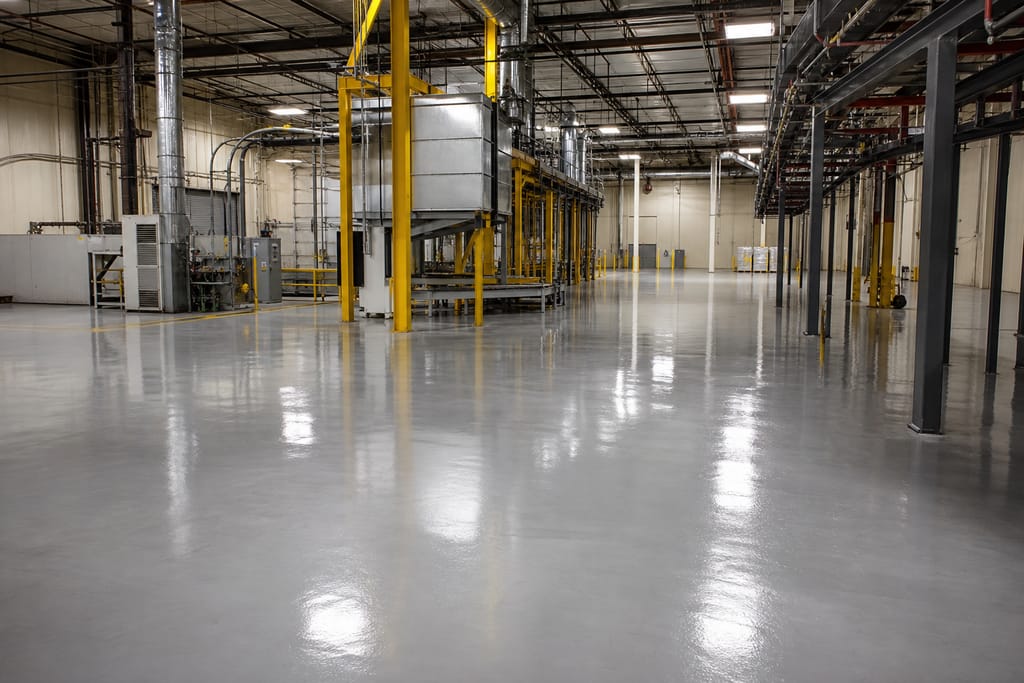
Industrial Floor Coatings in Fountain Hills, AZ
Industrial floor coatings in Fountain Hills, AZ built for chemical exposure and heavy machinery, multi-layer systems, free estimates.
- 15+ Years local experience
- 500+ Projects completed
- Licensed & Insured
Serving Fountain Hills and nearby communities.
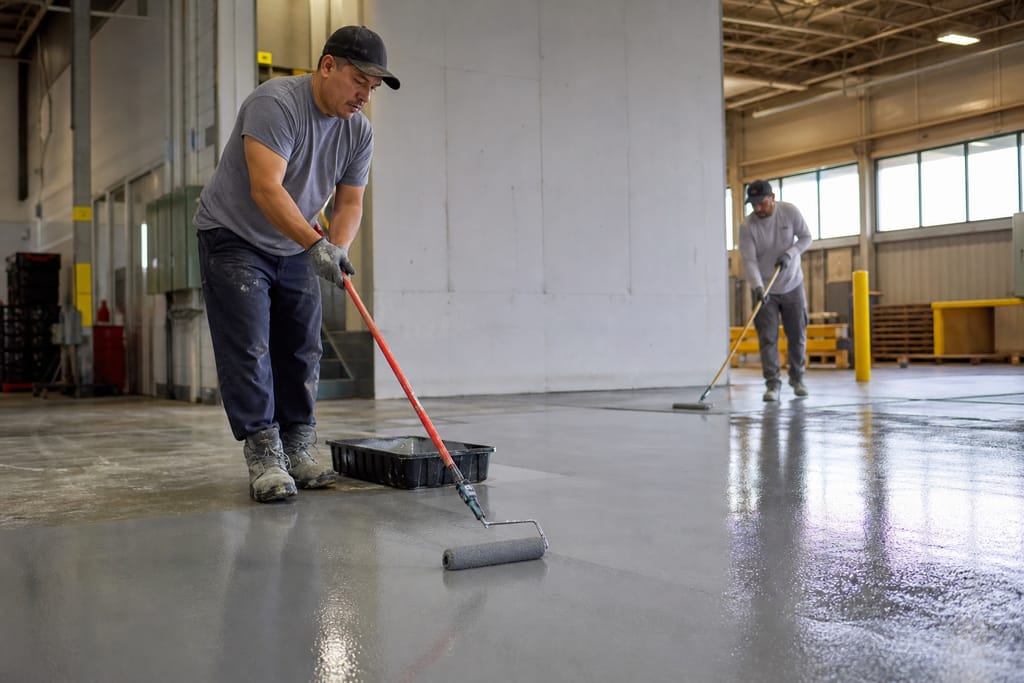
Industrial floors deal with chemical exposure, heavy machinery, and process heat that a standard epoxy system was never built for. Fountain Hills Epoxy Pros installs multi-layer, chemical-resistant coating systems for facilities where a thin topcoat would fail within weeks, not years.
We evaluate each process area separately before quoting a job, a machine shop floor near a coolant line needs a different system than a loading dock or a containment area, and treating them the same leads to early coating failure.
What's included
What's Included with Industrial Floor Coatings
Typically included: process area evaluation, aggressive surface prep, chemical-resistant primer, multi-layer coating build-up, containment detailing, extended cure and testing. Optional: static-dissipative coating for sensitive electronics areas, heat-resistant layer near equipment, coved base detailing for spill containment. Customer prep: clear affected areas of equipment and inventory, identify any process-specific chemical exposure ahead of the walkthrough.
Want a clearer scope?
Get a Free EstimateHow it works
How Our Industrial Floor Coatings Process Works
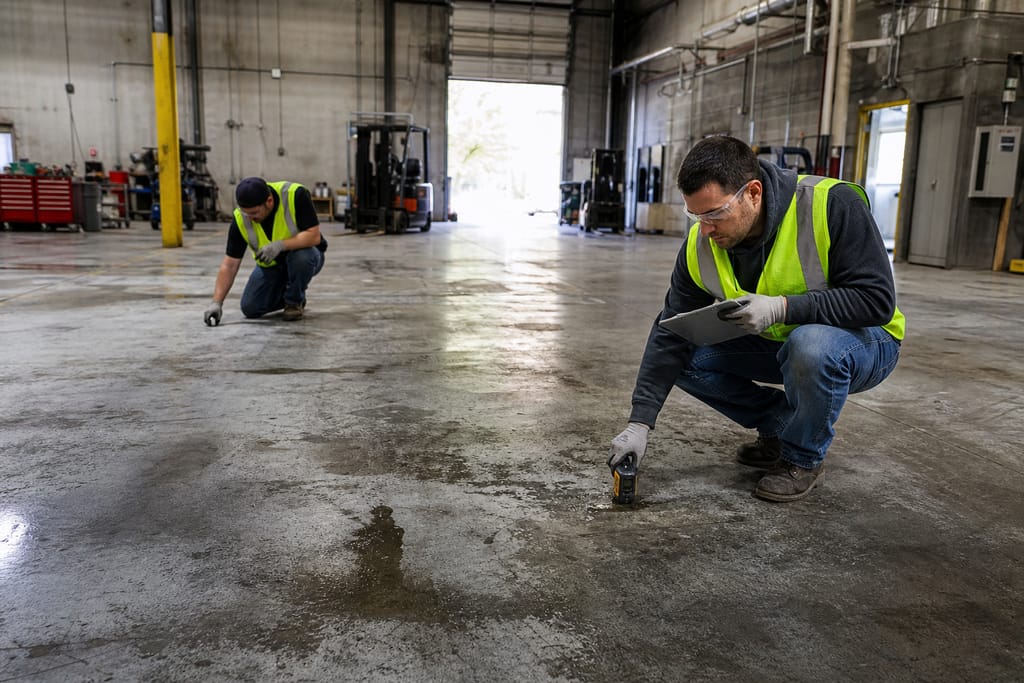 Step 1
Process Area Evaluation
Each zone gets assessed for chemical exposure, heat, and heavy equipment use.
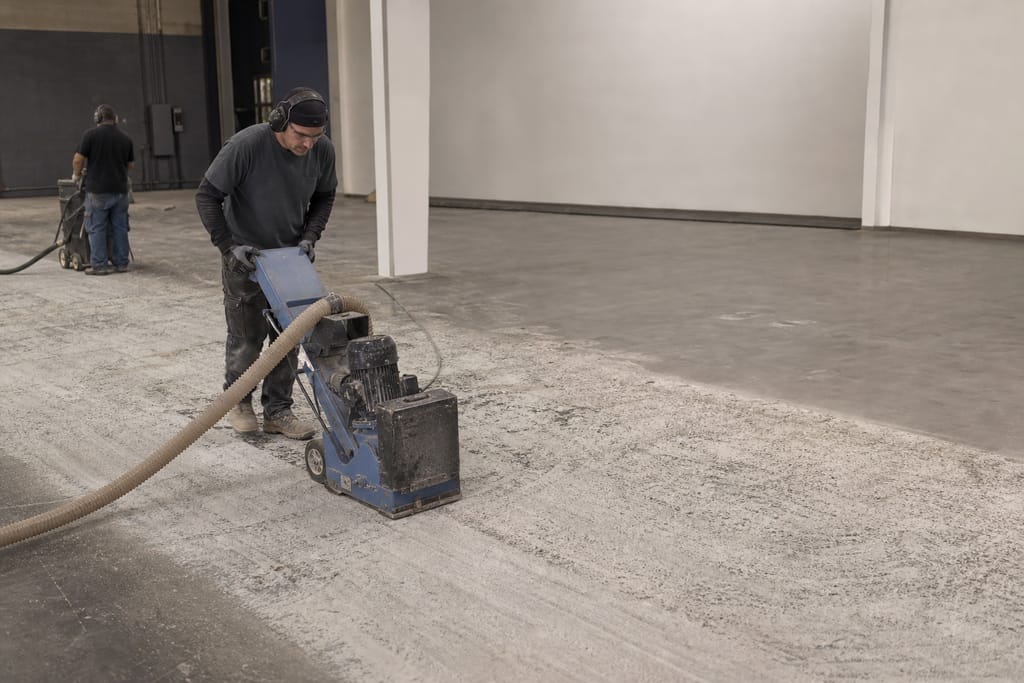 Step 2
Aggressive Surface Prep
Shot blasting or grinding removes contamination and old coatings thoroughly.
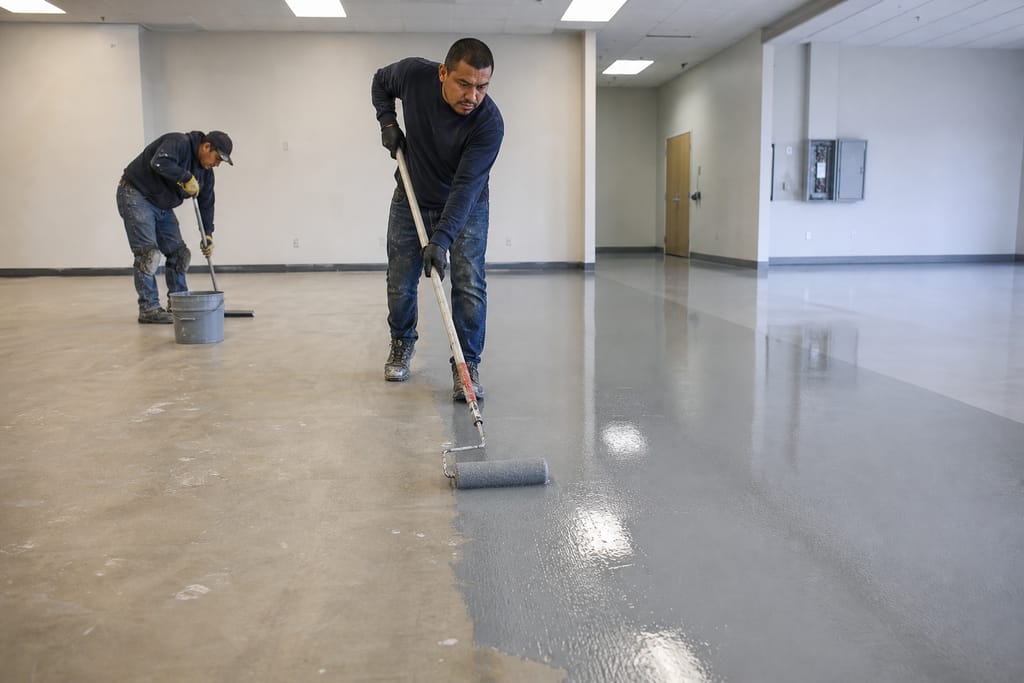 Step 3
Chemical-Resistant Primer
A specialized primer gets applied to resist harsh industrial substances.
 Step 4
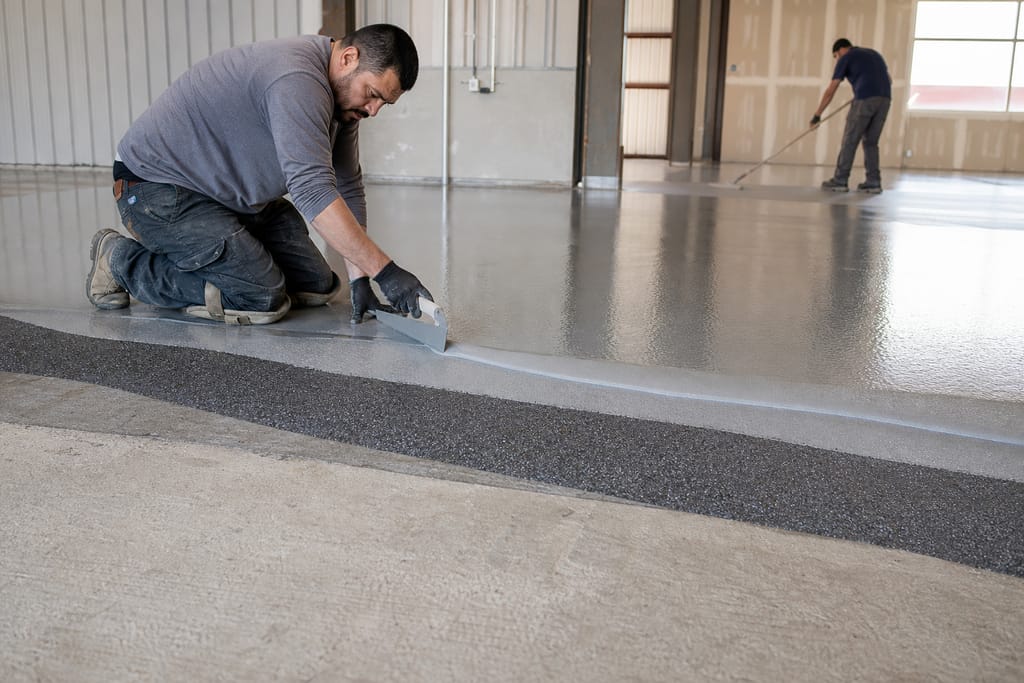
Multi-Layer Build-Up
Several coating layers get applied to achieve required thickness and strength.
 Step 5
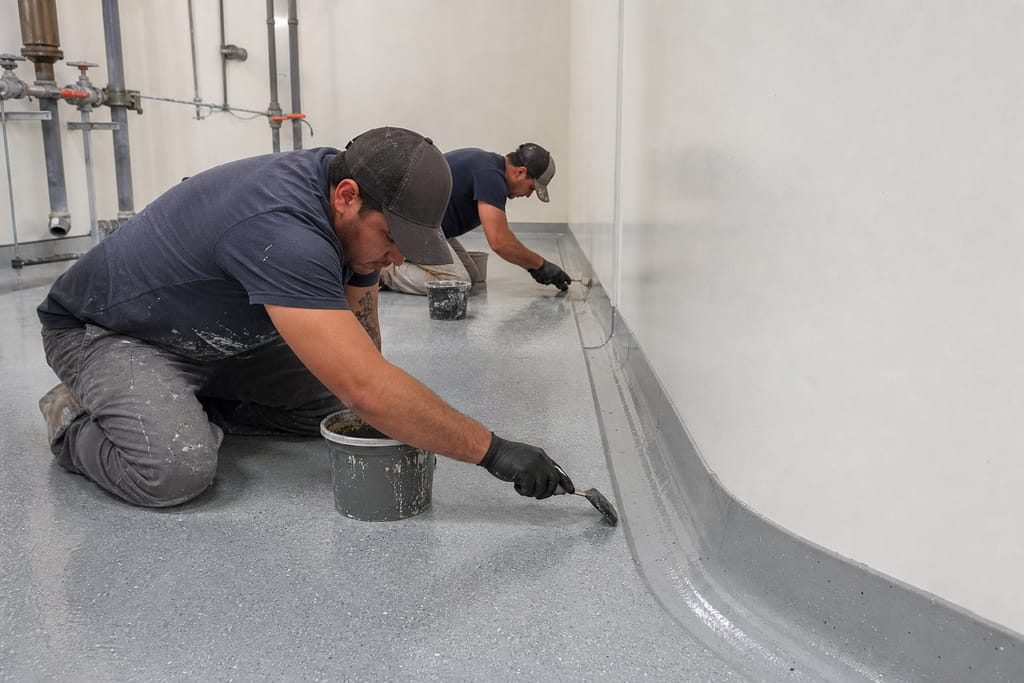
Containment Area Detailing
Coved bases and containment zones get detailed for spill control.
 Step 6
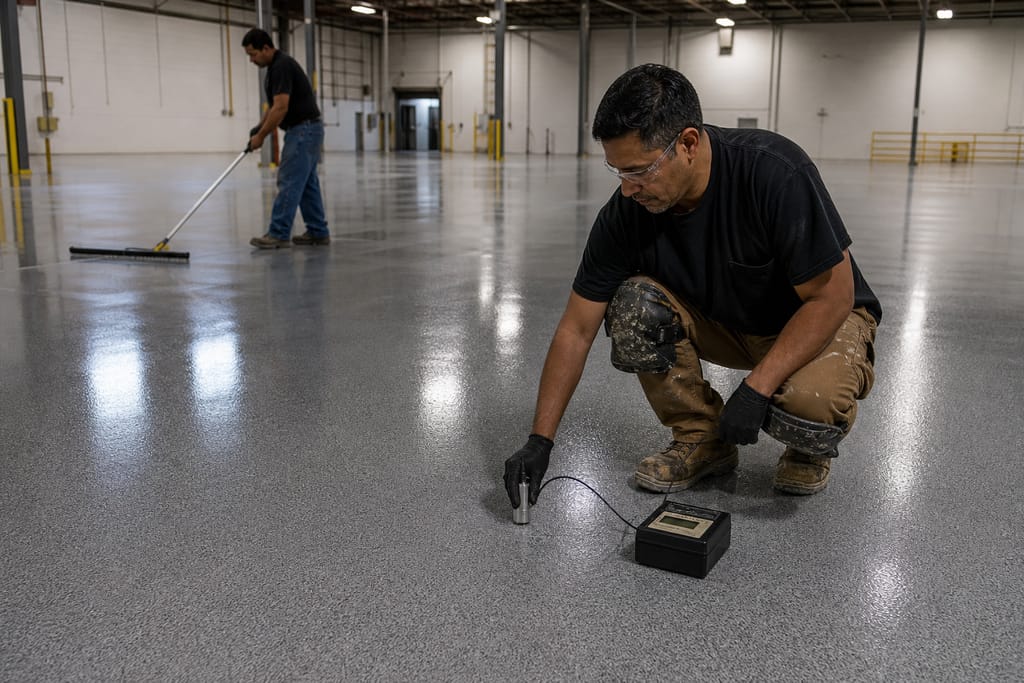
Extended Cure & Testing
The system gets cured fully and tested before resuming operations.
Materials
Materials and Methods for Industrial Floor Coatings
Industrial sites around Fountain Hills contend with both chemical exposure inside and extreme slab heat outside loading areas, so the system has to handle both.
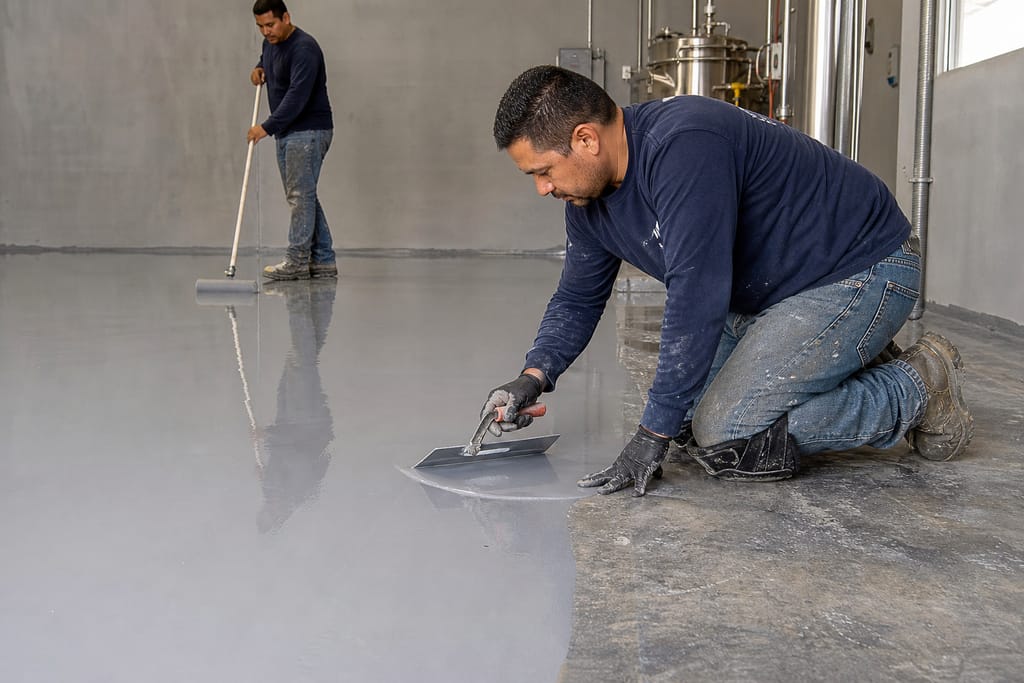
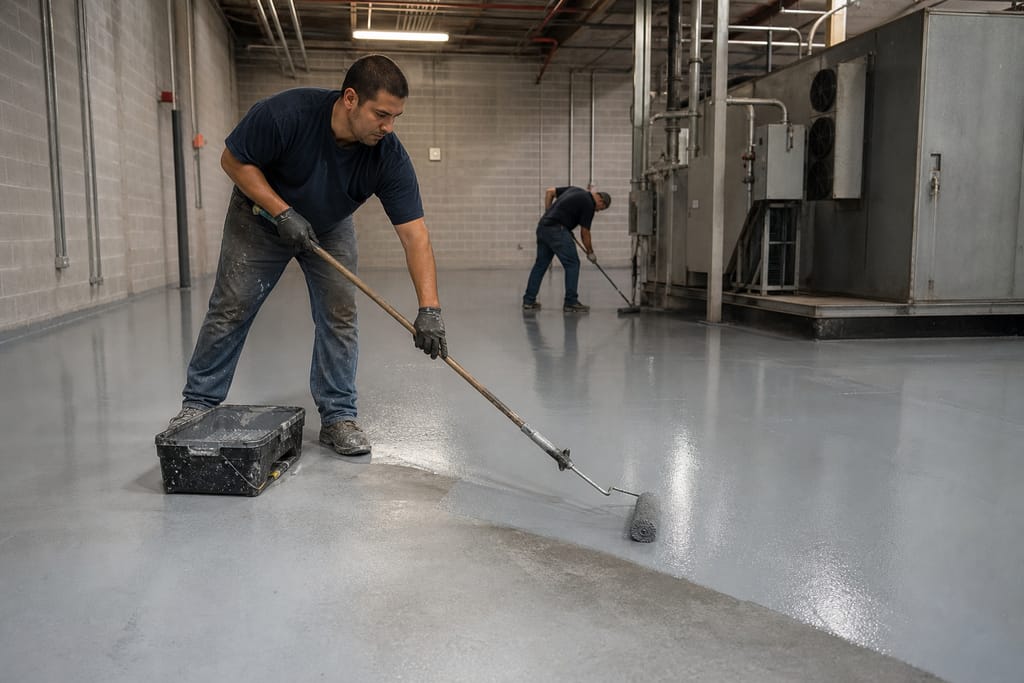
Chemical-Resistant Epoxy
A formula engineered to withstand acids, solvents, and industrial chemicals common in process areas.
Heat-Resistant Coating
A coating designed to handle elevated temperatures near equipment, relevant where slabs already run hot from Arizona sun exposure.
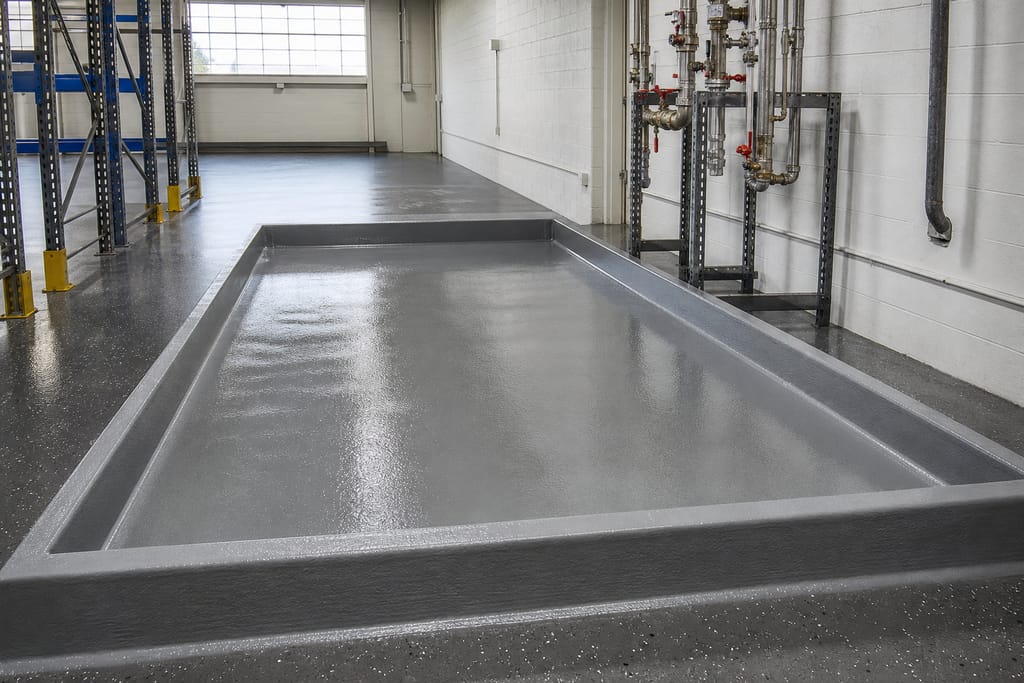
Secondary Containment Liner
A liner system helps contain spills within designated process areas as required by many facility safety plans.
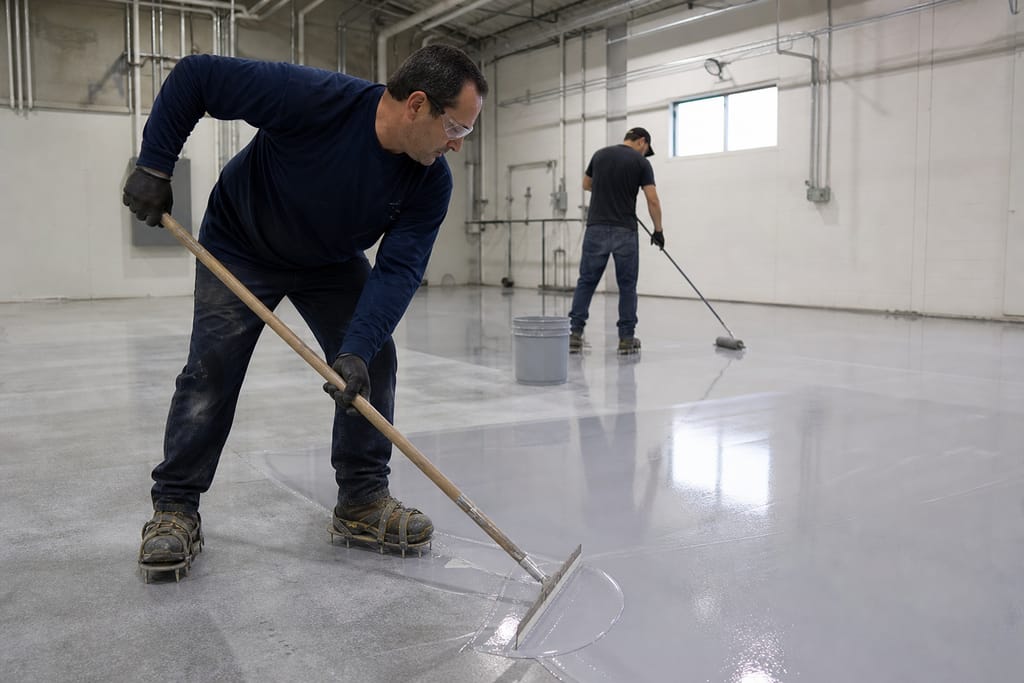
Novolac Epoxy Blend
A high-performance resin blend offers superior chemical resistance for the most demanding process environments.
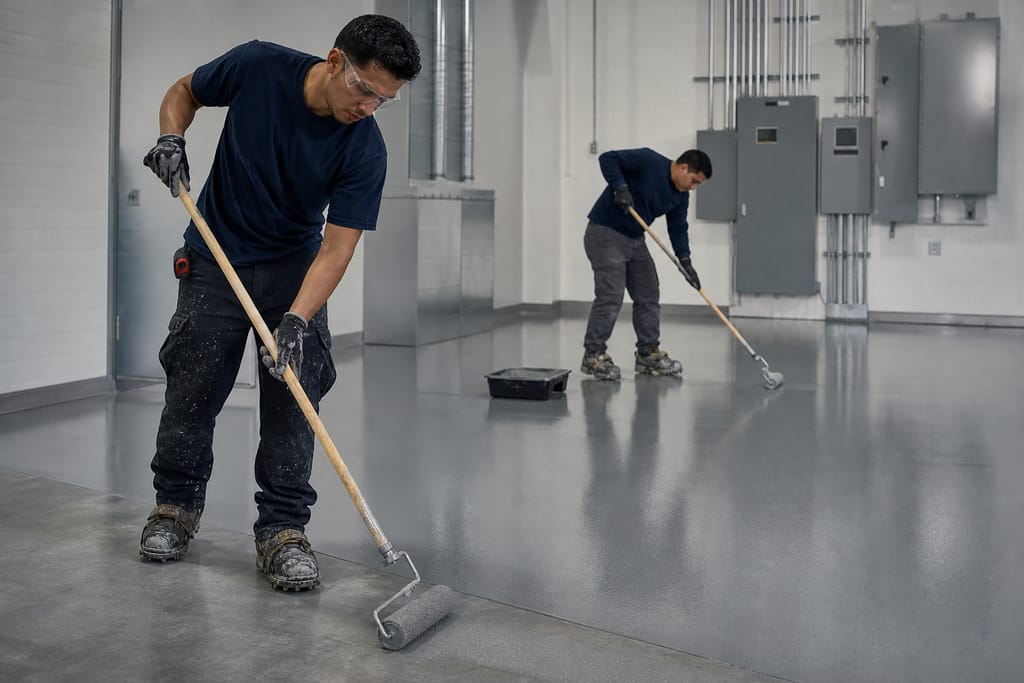
Static-Dissipative Coating
A coating designed to safely dissipate static electricity in areas with sensitive electronics or combustible dust.
Heavy Traffic Topcoat
A topcoat formulated for constant exposure to heavy machinery and sustained equipment loads.
Questions on materials?
Get a Free EstimateTimeline
How long does a an Industrial Floor Coating take?
Industrial systems need more layers and cure time than a standard garage or retail coating.
- 01
Process area evaluation and plan
1–2 days - 02
Surface prep (shot blasting/grinding)
1–2 daysdepending on footprint
- 03
Primer and base layers
1–2 days - 04
Multi-layer build-up
1–2 days - 05
Extended cure before operations resume
5–7 days
Need a schedule that fits?
Get a Free EstimateCodes & permits
Permits and Codes for Industrial Floor Coatings
Industrial facilities often carry specific environmental or safety code requirements, confirm with your local jurisdiction and any applicable agency before scheduling.
| Typically needs a permit | Often no permit |
|---|---|
| Secondary containment installation tied to environmental compliance | Resurfacing an existing industrial slab with the same chemical rating |
| Work connected to a change in process or occupancy classification | Topcoat renewal on a worn but structurally sound floor |
| — | Static-dissipative or heat-resistant coating upgrades |
Need help with permits?
Get a Free EstimateDIY vs pro
DIY vs Hiring a Pro for Industrial Floor Coatings
| DIY | Hire a pro |
|---|---|
| Not practical for true industrial environments, chemical-resistant systems require controlled mixing and multi-layer timing | Novolac and chemical-resistant resins have narrow working windows and specific mix ratios, getting it wrong means a coating that fails under the exact chemicals it's supposed to resist |
| A small non-process storage area might tolerate a simpler coating | A professional crew tests the primer bond and layer thickness before signing off, catching problems before the floor goes back into service |
Not sure DIY vs pro?
Get a Free EstimateWhen to call
When to Call for Industrial Floor Coatings
Call Fountain Hills Epoxy Pros or request a free estimate for a process-area walkthrough.
- Your current floor is pitting or degrading from chemical exposure
- You're setting up a new process line and need floor protection before equipment arrives
- Spills or leaks have damaged the existing coating
- You need containment detailing to meet a safety or environmental requirement
Seeing warning signs?
Get a Free EstimateFAQs
Industrial Floor Coatings FAQs
How much does industrial floor coating cost?
Pricing varies widely by chemical resistance requirements and layer count, typically $5 to $12 per square foot for multi-layer systems. A walkthrough gives an accurate scope.
How long until the facility can resume operations?
Most industrial systems need 5-7 days of extended cure before full chemical and equipment exposure resumes, light foot traffic is often fine sooner.
Do industrial coatings need a permit?
Some containment or environmental compliance work does. Standard resurfacing usually doesn't. Check with your jurisdiction for your specific use case.
Is DIY industrial flooring a good idea?
For true process areas. Chemical-resistant resin systems require precise mixing and layer timing that's difficult to get right without experience.
What's the downside of a thin industrial coating?
A coating applied too thin for the chemical exposure or equipment load wears through fast, often within months, leading to repeat recoating costs.
Industrial Floor Coatings
Get an Industrial Floor Coatings Estimate in Fountain Hills
Call (928) 288-4249 or request a free estimate and we'll assess your process areas before quoting a system.
Questions about this?
Get a Free EstimateMore services
Other Epoxy Flooring services
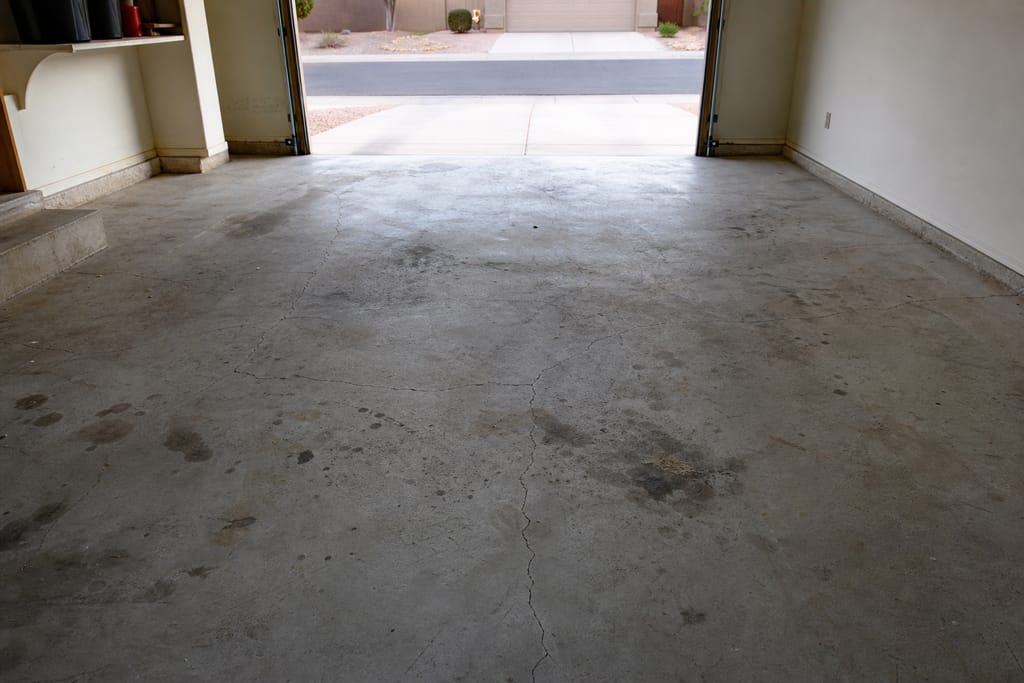
Garage Floor Epoxy Coatings
Garage floor epoxy coatings in Fountain Hills, AZ. Crack repair, hot-tire resistant finishes, fast turnaround. Free estimates.
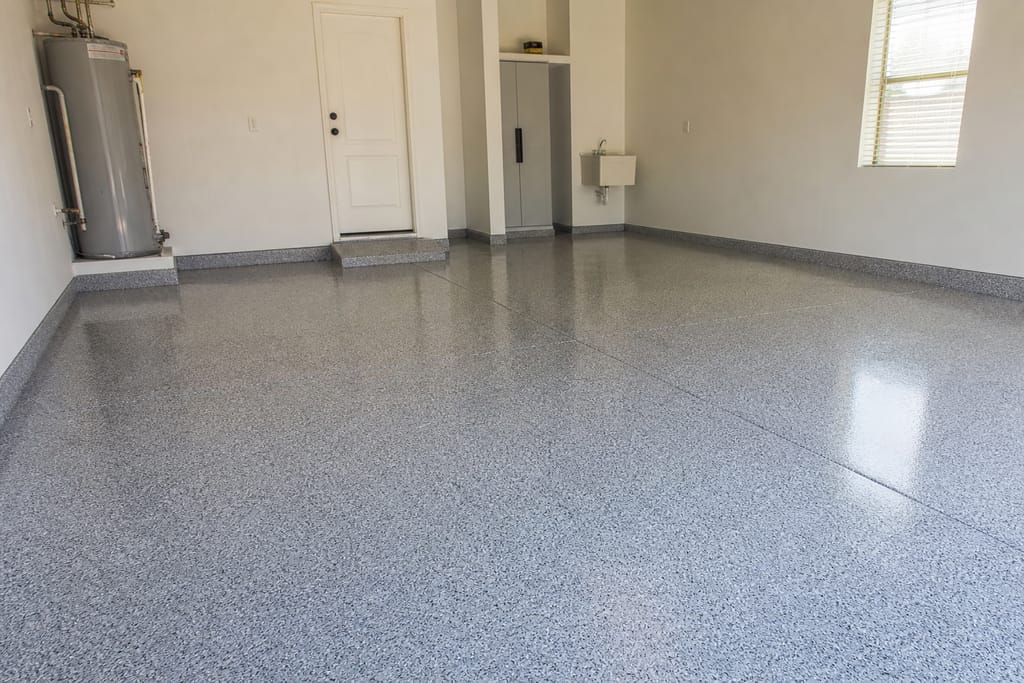
Epoxy Floor Coatings
Epoxy floor coatings for Fountain Hills garages, workshops, and interior rooms. Durable, UV-stable finishes. Free estimates.
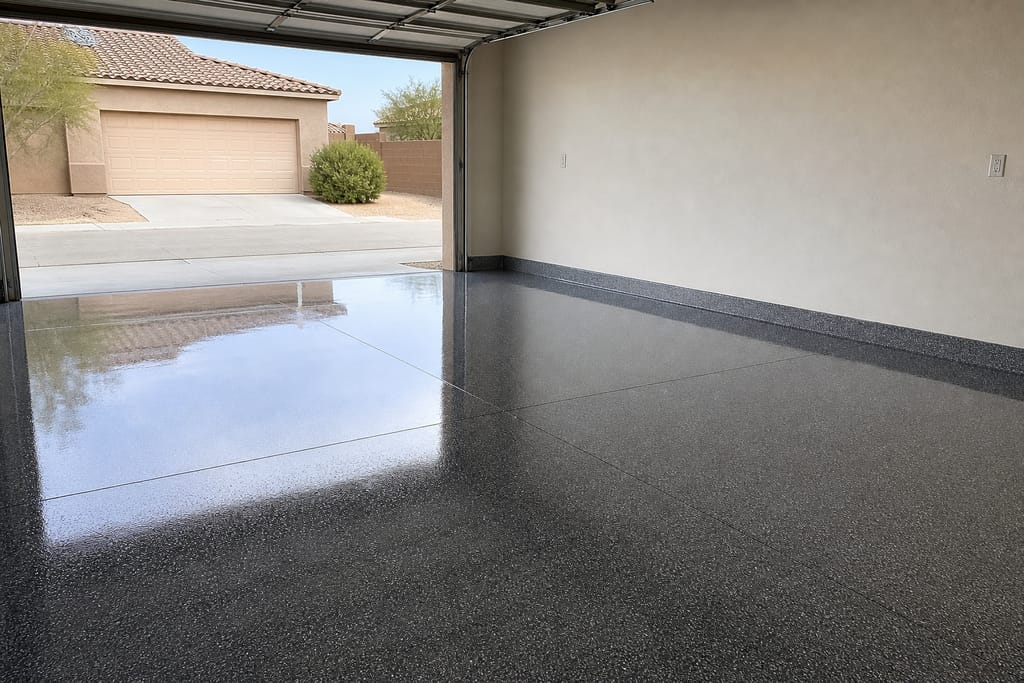
Polyaspartic Floor Coatings
Fast-cure polyaspartic garage coatings for Fountain Hills, AZ. Heat-tolerant, UV-stable finishes ready in hours. Free estimates.
Ask about Industrial Floor Coatings
Tell us about the project and how to reach you.